Sometimes I’m amazed at how games far removed from familiar shooters or competitive projects can be useful in real life. Simulators and role-playing games are often seen simply as a way to relax, but they hide an entire set of skills that can easily be applied in everyday life or work. They provide a safe space for experimentation and mistakes, where consequences can be experienced without real losses. In such games, there’s time to think through decisions, study the situation, and test different approaches. And the deeper you dive into these mechanics, the clearer it becomes that the experience gained in a game can be valuable in real life.
Simulators and Planning Actions
In simulators, you often have to manage multiple variables at once – from resources and budget to time and logistics. For example, in Stardew Valley, you need to plan your crops so that seasonal plants have time to yield a harvest while simultaneously upgrading tools, improving your farm, and maintaining relationships with villagers. In Microsoft Flight Simulator, the pilot is responsible not only for flying the aircraft but also for plotting the route, accounting for weather conditions, and monitoring systems — just like in real aviation, where every detail can influence the outcome of a flight. In sports managers such as Football Manager, you have to combine training schedules, tactical choices, financial management, and the team’s morale, keeping a balance between long-term plans and immediate needs.
The more complex the game mechanics, the more they demand attentiveness and the ability to tailor processes to your own style. Sometimes, in such projects, it’s important to find the right balance between speed and accuracy to avoid losing efficiency. This is where even external tools like cs2 teams, although intended for shooters, perfectly illustrate how useful it can be to adapt controls to personal habits to achieve the best results. This approach gradually develops the ability to set up your workspace, choose optimal methods for completing tasks, and avoid unnecessary time losses in real life.
Ultimately, simulators teach you to think systematically and predict consequences before taking action. This skill is especially valuable in situations where mistakes are costly — for example, when organizing events, running a business, or planning a budget. By playing, we get used to seeing not only the current step but also several steps ahead, which helps us act with greater confidence and awareness in real life.
Role-playing Games and Decision-making
RPG projects often require analyzing the situation and choosing one of several paths, understanding that each will affect the further course of events. Baldur’s Gate, Divinity: Original Sin, or even Skyrim give you the freedom to act however you like — help, deceive, charge head-on, or look for alternative routes. Sometimes the story reacts to the smallest details: choosing a certain dialogue line can lead to unexpected consequences, change an entire faction’s attitude toward you, or block an important quest. And, just like in real life, you can’t predict everything — a single wrong word may ruin your relationship with a character, while successful diplomacy can open opportunities that would otherwise remain closed.
In tabletop Dungeons & Dragons, this feeling is even stronger: every choice literally changes the scenario, and collective decision-making trains you to listen to others and defend your own point of view. The player has to consider their character’s personality, the party’s goals, and the unpredictability of the game master, who can introduce new circumstances at any moment. Such situations teach flexibility — the ability to quickly adapt if a plan fails and to find unconventional solutions, even when the outcome seems obvious.
The more complex the role-playing system, the deeper the player immerses themselves in the chain of cause and effect. This develops strategic thinking and helps in real life to assess not only short-term benefits but also the long-term consequences of your actions — whether it’s working on a project, negotiating, or managing personal relationships.
Simulation of Complex Processes
There are also more specialized simulators, such as Euro Truck Simulator or Kerbal Space Program, which model real-world processes with high precision. In Euro Truck Simulator, the player must take into account the route, cargo condition, fuel consumption, delivery schedule, and weather conditions, while also following traffic rules. It’s not just driving from point A to point B — it’s a full logistical challenge where concentration, accuracy, and the ability to plan ahead are essential. In Kerbal Space Program, on the other hand, the focus is on engineering calculations, balancing mass and fuel, selecting the optimal trajectory, and accounting for gravity — here, a mistake made during the planning stage can lead to disaster once you’re already in space.
Such games help develop patience, attention to detail, and the ability to work with large amounts of information. They train you to assess risks, calculate backup options, and adapt to unforeseen circumstances. Even if the specific knowledge from these simulators is never applied directly, the skill of breaking a task into stages and seeing the bigger picture is valuable in real life — from managing work projects and coordinating team efforts to organizing family trips or relocations.
Moreover, these games build the habit of controlling several processes at once and keeping key indicators in mind. This experience teaches you to act steadily, without rushing, yet always with a sense of responsibility for the final outcome — a quality that is especially important in situations where the cost of error is high.
Social Skills and Teamwork
In multiplayer role-playing games, whether it’s World of Warcraft or Final Fantasy XIV, it’s important not only to level up your character but also to build effective communication. Coordinating raids, negotiating resource distribution, or preparing for large-scale events requires discipline, the ability to listen, and the skill of expressing your ideas clearly. Sometimes the success of an entire run depends on how quickly participants can exchange information and adjust the strategy right in the middle of a battle.
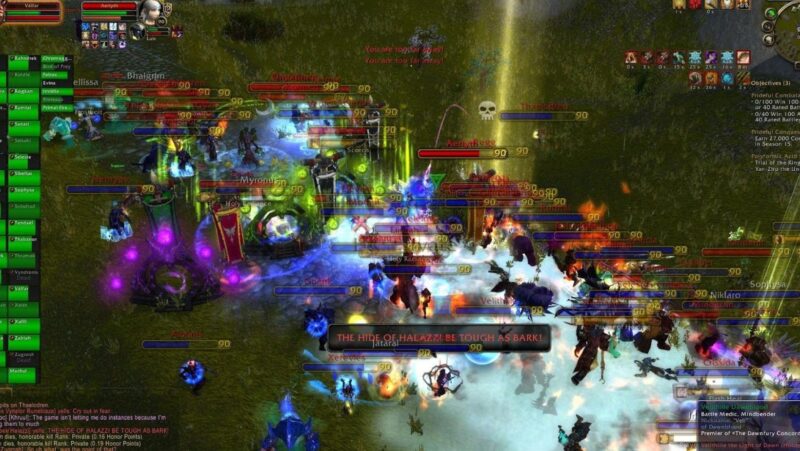
In such conditions, players learn to assign roles depending on the situation: someone becomes the leader and takes responsibility for decision-making, someone focuses on supporting the team, and someone acts as a tactical coordinator. This experience closely mirrors the workplace, where mutual support, a clear understanding of responsibilities, and the ability to resolve conflicts on the fly are equally important.
Moreover, multiplayer RPGs help develop valuable networking skills: finding reliable partners, building long-term in-game alliances, and maintaining a good reputation in the community. All of this can be applied to real life — from participating in joint projects to effective collaboration with clients or colleagues.
Conclusion
Simulators and role-playing games serve as a kind of training ground for real life. They develop strategic thinking, flexibility, the ability to work in a team, and adaptability to changing conditions. All of this makes them valuable not only as entertainment but also as a tool for personal growth.