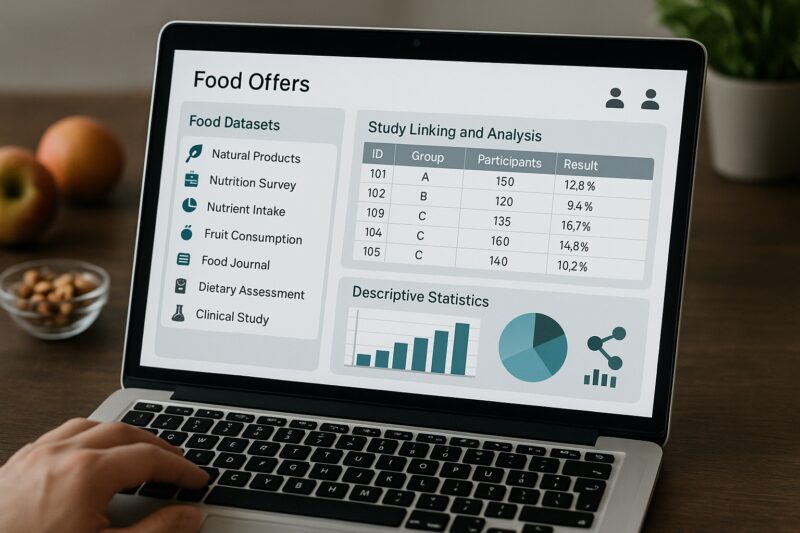
food archives transmartproject provide a shared platform for food research data. The system stores study data, lab results, and survey records. It lets teams search, compare, and reuse datasets. This guide explains how tranSMARTProject organizes food archives, how researchers use them, and how teams add high-quality food data to the platform.
Key Takeaways
- tranSMARTProject serves as a centralized open data platform that organizes and stores food archives to support research on diet, nutrition, and related health outcomes.
- Food archives in tranSMARTProject are structured with clear separation of raw data, derived variables, and documentation, enabling efficient search and data reuse for researchers and industry professionals.
- Researchers, public health officials, food companies, and policy makers use these harmonized food datasets to analyze diet impacts, track nutrition trends, and evaluate food-related interventions.
- Contributing food data to tranSMARTProject requires standardized preparation, including mapping variables to ontologies, detailed metadata creation, validation checks, and controlled access settings.
- Following best practices such as consistent units, comprehensive codebooks, controlled vocabularies, and clear documentation enhances the quality and usability of food archives within tranSMARTProject.
What Is tranSMARTProject And Why Food Archives Matter
tranSMARTProject is an open data platform that stores clinical and translational data. It supports data queries, cohort creation, and integrated analysis. The project adds food archives to expand studies on diet, exposure, and nutrition outcomes. Researchers access harmonized food data to test hypotheses faster. Food archives transmartproject reduce duplication by preserving raw and processed food datasets. They enable reproducible studies and stronger evidence for food policy and industry decisions.
How Food Archives Are Organized In tranSMART
tranSMART organizes food archives with clear structures for datasets, variables, and files. The platform separates raw measurements, derived variables, and documentation. Users can link food records to cohorts, timepoints, and clinical endpoints. The system indexes files for search and assigns stable identifiers. Food archives transmartproject use access controls so teams can share or restrict datasets. The organization supports efficient reuse and reduces data preparation time.
Practical Use Cases: Research, Public Health, And Food Industry Applications
Researchers use food archives transmartproject to link diet with biomarkers and disease outcomes. Public health teams analyze archived food data to track population exposure and nutrition trends. Food companies evaluate ingredient performance and shelf life using archived lab results. Policy makers use pooled datasets to test interventions before deployment. Each use case relies on harmonized variables, clear metadata, and stable identifiers to combine data from multiple sources.
How To Contribute Food Data To tranSMARTProject: Step‑By‑Step
Step 1: Prepare source files. Collect raw measurements, codebooks, and consent documentation. Step 2: Map variables to standard ontologies. Use the platform’s recommended vocabularies. Step 3: Create metadata records. Describe protocols, instruments, and sample handling. Step 4: Upload files to a staging area and run validation checks. Step 5: Resolve validation errors and document fixes. Step 6: Submit for curation and assign access controls. Food archives transmartproject accept well-documented uploads faster and with fewer edits.
Best Practices For Preparing High‑Quality Food Datasets
Use consistent units and document unit conversions. Include codebooks that list variable names, labels, and value ranges. Record sampling dates, locations, and instruments used. Apply controlled vocabularies to key fields such as food item, matrix, and assay. Run automated validation checks for missing values and outliers. Keep raw files unchanged and place derived files in separate folders. Assign clear file names and add readme files that explain processing steps. Teams that follow these steps make their food archives transmartproject records easier to find and reuse.