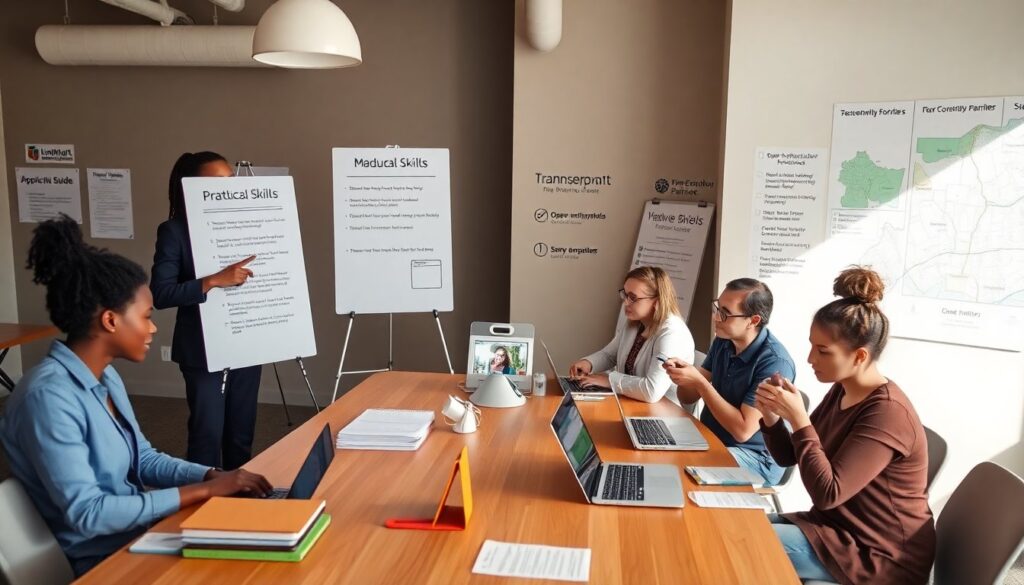
education journeys transmartproject begin when a community sets clear learning goals. The project links local needs with shared resources. It uses peer mentors, open content, and short local events. The model scales by repeating simple steps. The guide explains what TransMartProject is, what its main parts look like, and how a group can plan, launch, and grow a program.
Key Takeaways
- Education journeys TransMartProject empowers communities to set clear learning goals that match local needs and available resources.
- The TransMartProject model uses peer mentors, modular short sessions, and open content to lower barriers and support adult and youth learners.
- Local mentors are essential for recruiting, guiding sessions, and adapting materials in a TransMartProject education journey.
- Community governance and regular feedback loops keep programs relevant, practical, and well-adapted to learners’ needs.
- Step-by-step planning, running, validating, and scaling ensure TransMartProject programs remain manageable and impactful.
- Building a network and seeking modest, outcome-linked funding help sustain and expand education journeys TransMartProject initiatives effectively.
What TransMartProject Is And Why It Matters For Learners
TransMartProject is a community-led learning model. The project helps neighbors teach one another. It connects local skills with free or low-cost resources. The model uses small groups, local mentors, and public spaces. It focuses on practical skills and on social support. The model matters because it lowers barriers to learning. It helps adults return to study with low cost and low risk. It helps youth try new skills before they commit to formal programs.
Communities run TransMartProject with shared rules. They choose topics based on clear, local demand. Topics can include job skills, basic digital tools, language practice, and trade skills. The project often uses open educational resources and local experts. The model encourages short, modular sessions. Learners join one module and can join more later. This approach reduces stress and improves retention.
TransMartProject also builds social capital. Neighbors meet, trade skills, and form mentoring chains. The project creates visible local value. Employers notice when neighbors gain useful skills. Local groups use TransMartProject to show quick wins. Those wins lead to more funding and more learner interest. The model so matters both for practical skill gains and for community resilience.
Core Components Of A TransMartProject Education Journey
A clear goal guides each education journeys transmartproject program. The goal tells learners what skill they will gain. It also tells mentors how to measure progress. Programs break goals into short modules. Each module has one learning objective and one small assessment.
Curriculum uses open resources and local content. The project favors simple guides, short videos, and hands-on tasks. Local mentors adapt these materials. Mentors keep language plain and tasks short. The learning cycle runs weekly. Learners meet, practice, and get feedback.
Mentors form the program backbone. Mentors recruit learners, run sessions, and record progress. Mentors work in pairs to reduce burnout. The project trains mentors with clear checklists. The checklists cover session plans, feedback forms, and safety rules.
Assessment stays practical. The project uses small tasks, portfolios, and demonstrations. Learners show skill by doing real tasks. The project avoids long exams. Local partners validate the results. Partners can include small employers, libraries, and schools.
Logistics stay local and low-cost. Sessions use public rooms, cafes, or outdoor spaces. The project schedules short sessions after work or on weekends. It provides basic supplies and shared devices when needed. The budget stays transparent. The group tracks costs per learner and per module.
Community governance keeps the project local. The group sets simple rules for participation, conflict resolution, and funding. The group meets monthly to review progress. It updates goals and modules based on learner feedback. This loop keeps the program relevant and practical.
How To Plan, Launch, And Scale A Local TransMartProject Program
Step 1: Define the learning goal. A small team interviews five to ten neighbors. The team lists the top three skills the community needs. The team picks one clear goal for the first cycle.
Step 2: Map local assets. The team lists available mentors, venues, and devices. The team also lists free resources and short courses. This map shows what the team can run now and what it must source.
Step 3: Build a simple module. The team creates a module with one learning objective, three sessions, and one practical task. The team picks open content and writes a short facilitator guide. The guide uses bullet steps and timings.
Step 4: Recruit mentors and learners. The team invites mentors with clear role descriptions. The team runs a short info session for learners. The session shows the module plan and the expected time. The team keeps enrollment open and flexible.
Step 5: Run the first cycle. Mentors follow the guide and record attendance and task results. The team collects quick feedback after each session. The team keeps notes on what worked and what did not.
Step 6: Validate outcomes. The team asks a local partner to review learner portfolios or demonstrations. Partners give simple feedback and possible micro-certificates. This validation increases learner trust and local credibility.
Step 7: Improve and repeat. The team updates the module and mentor guide using collected feedback. The team opens the next cycle with slight changes. The team tracks cost per learner and time to outcome.
Step 8: Scale slowly. The team adds one new module every two cycles or expands to one nearby neighborhood. Each new module stays small and measured. The team documents processes and trains new mentors with the same checklists.
Step 9: Seek modest funding. The group applies for small grants, local sponsorships, or pay-what-you-can models. The group keeps funding tied to outcomes. This link keeps the program focused on learner results.
Step 10: Build a learning network. The group shares guides, success stories, and data with nearby groups. The network meets quarterly to swap materials and to plan joint events. The network helps spread the model while keeping local control.
These steps let a community plan, launch, and scale a local education journeys transmartproject program. The steps keep work simple and measurable. They help communities create steady learning paths that learners can join at any time.